7 case studies
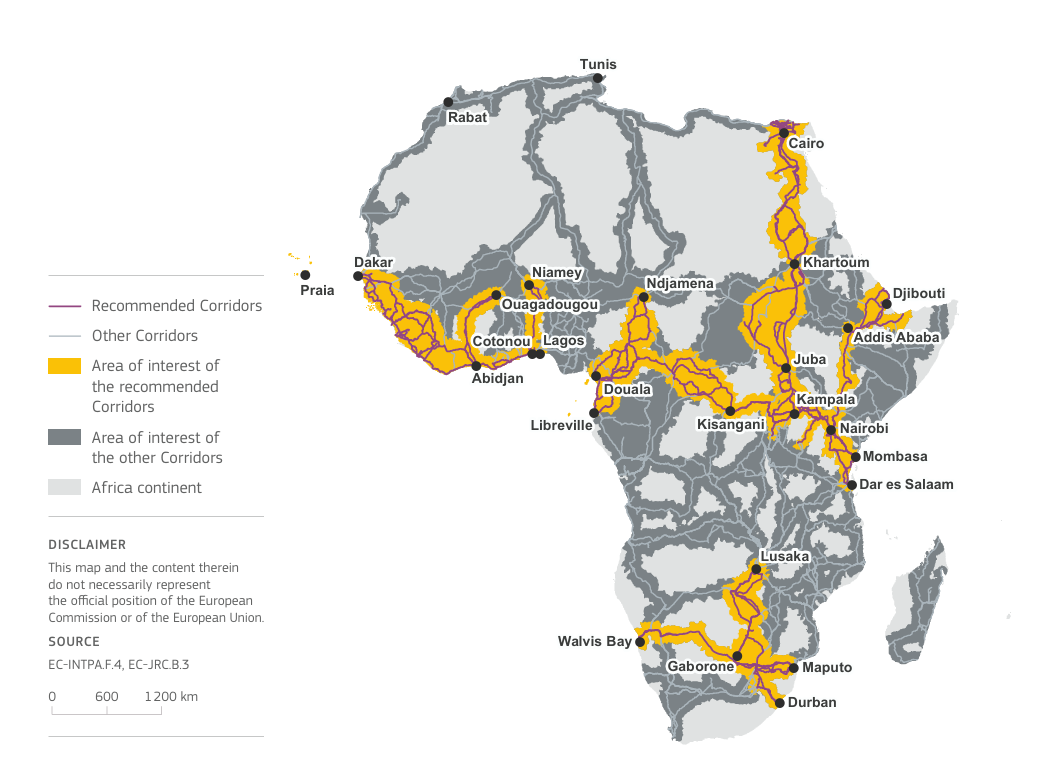
The Lobito Corridor
It is being hailed as a symbol of African progress. In truth, it is a mirror of everything negative the continent endures: Chinese debt, Western opportunism, Congolese blood, Angolan misrule — and a railway that connects foreign interests more efficiently than it connects the people who live along its tracks.
MEDUSA and East Africa undersea Cable
7,100 kilometers of high-speed fiber optic networks connecting Africa and the EU. The MEDUSA and East Africa undersea cables are positioned to feed economic value into Europe’s digital industries while data flows in only one direction — from Africa to Europe.
The $1.2B Nachtigal hydroelectric dam that has forced Cameroon into debt
A $1.2 billion, 420 MW “green” flagship started before Global Gateway — structured around debt, offtake guarantees and EDF control, not a viable national electricity sector for Cameroon.
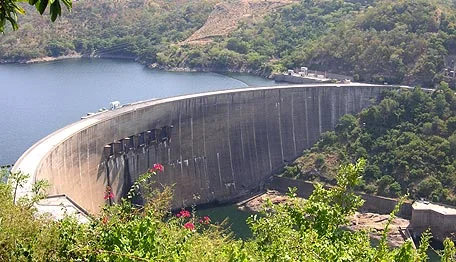
Kariba Dam Rehabilitation: Targeting Zimbabwe’s Gold and Zambia’s Copper
A 67-year-old dam on the Zambia–Zimbabwe border, approved for rehabilitation a decade before Global Gateway, now listed as a Team Europe flagship because it powers the mines that feed Europe’s corridor strategy — not because it was designed for citizens.
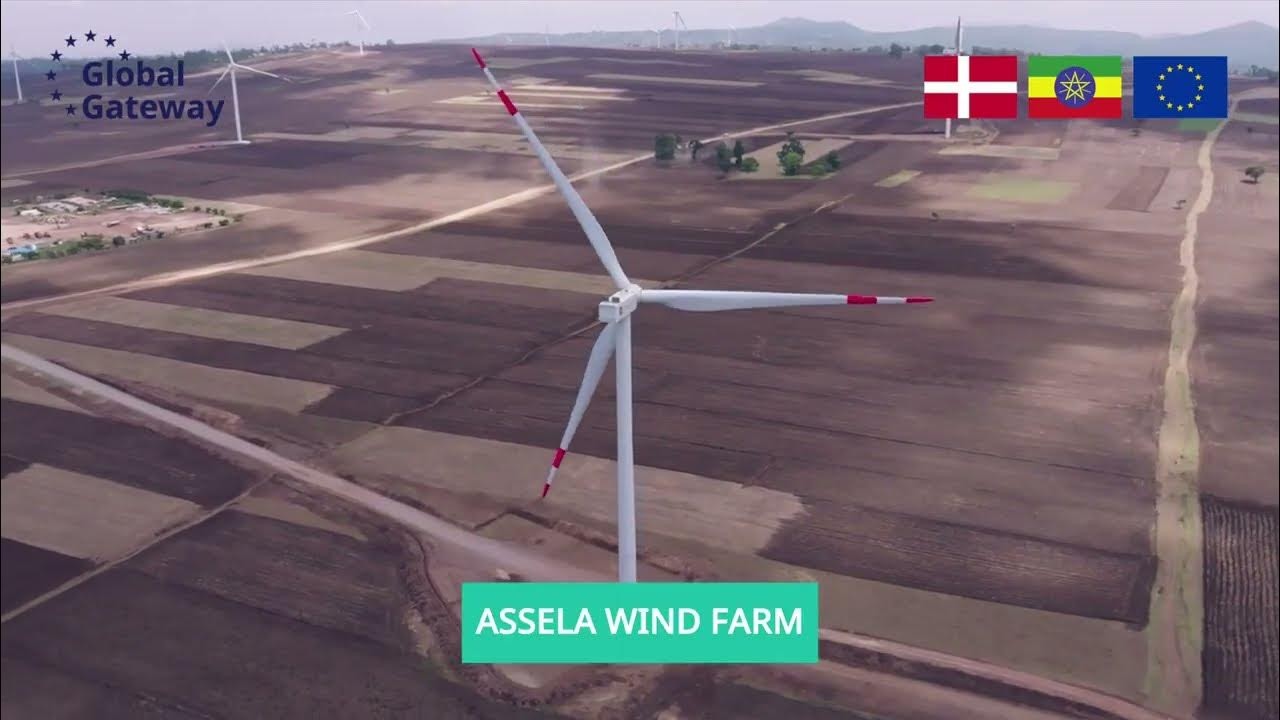
Assela Wind Farm: A Power Plant Ethiopia Does Not Need
Branded as Denmark–Ethiopia Global Gateway partnership — yet the contract was signed in 2018, procurement was tied to Danish firms, Siemens Gamesa kept operational control, and Ethiopia’s GERD surplus already overshadows this 100 MW plant.

MAV+ in Rwanda
A genuinely worthwhile project repackaged as a Gateway success — while the IP and production stay with European pharma.
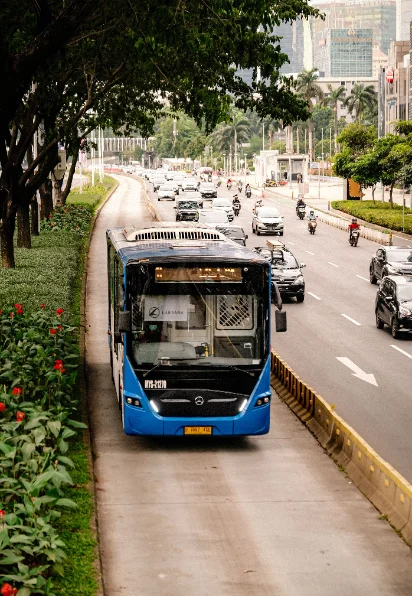
Construction of Bus Rapid Transit system in Nairobi, Kenya
A colonial-era masterplan revived as a Global Gateway showcase — while the real agenda is access to East Africa’s trade corridors, European suppliers, and another $410m debt bill for Kenya.
Defining Characteristics of Global Gateway Camouflage Projects
Global Gateway camouflage projects are those GG initiatives that are publicly branded as having considerable benefit for partner countries, when in fact they are intended to cover up for more harmful extractive projects. These projects, upon careful analysis, typically exhibit one or more of the following distinct characteristics:
They are often vaguely defined and lack clear, measurable outcomes, with little tangible clarity on how they concretely fit within the overarching joint EU-Africa 2030 Strategy. Examples: "Gender Transformative Action" in Tanzania; "Sustainable cocoa: from deforestation to reforestation" in Ivory Coast — while inherently laudable in isolation, frequently merely repackaged versions of existing, traditional development aid, lacking the scale, innovation, or specificity required to be truly transformative.
They are often explicitly or implicitly aimed at driving policy and regulatory change in partner countries, with the core objective of creating an "enabling environment" for European private sector entry and dominance in strategic areas like digital infrastructure, green energy, and raw material extraction. Examples: BRT in Kenya; vaccine initiative in Rwanda.
They are either already under implementation under initiatives that predate the GG by many years, or they are projects of such a scale that they could have been easily funded by local national resources or traditional development grants. Examples: The Kariba Dam Rehabilitation Project in Zambia was approved and funded by the EU as far back as 2017, four full years before the GG's grand inception. Similarly, the Mwache Water Project in Kenya received initial approval from the World Bank in 2013, with its later phases awkwardly and retroactively retrofitted into the GG portfolio to inflate its visibility.
They are intentionally selected to be highly publicly visible and politically popular (e.g., school renovations, local feeder road rehabilitation, small health clinics) to generate immediate goodwill and media coverage, thereby strategically covering up for the more critical, geopolitically sensitive, and financially substantial projects focused exclusively on strategic resource and logistics corridors.
They are often projects already fully funded by other multilateral loans (e.g., from the World Bank or the African Development Bank) and do not represent new EU financial mobilization, thereby creating a deliberately misleading impression of scale, activity, and generosity.